Sydney is a GREAT city!!! Auckland was a great city! Wellington was a great city!
We've been in Sydney for the past few days, mostly walking around exploring the town. We saw one of the best views in the world at the best mall cafeteria i've ever been to at Bondi Junction. We walked down to Bondi beach which was awesome. We had great Dim Sum on the 5th floor of a building in Chinatown (lonely planet secret treasure). Went down to see the Sydney Opera House, I never actually knew there were really 2 buildings not just one. Did a coastal hike from Bondi to Coogee yesterday and spent some time there then walked back to Bondi Junction. Went to a theater owned by the hare-krishna's to see a movie. The seating was more like lounge chairs and bedding instead of theater chairs. Great sound system, etc. Went to Darling Harbour to do some exploration. Visited the area of Paddington for some markets and some coffee shop people gazing and reading.
We're staying in the Kings Cross area of Sydney, about a 15 minute walk to downtown and the heart of lots of action in the evenings. Our hotel, O'Mally's has air conditioning and is quite cozy. To get to our room in the evenings we walk through the door to the lady's bathroom, then open this gigantic, huge vault like door to climb the stairs to our room, its quite bat-cave-ish. Its also quite disconcerting to people in the pub when they see us pop out of this door, no kidding its about 6 inches thick of steel.
Finished The Lexus and the Olive Tree, I'll post review later.
Tomorrow morning we head off to Brisbane area of the country on a very early 7am flight.
I've been reading the local papers when I get a chance. Its very illuminating to get the perspective on what is happening in their own culture and how they choose to write about it, but its also illuminating to read about how they interpret things going on in America or other parts of the world. I should provide some examples in future postings.
Friday, March 10, 2006


Sunday, March 05, 2006
Portland Public Schools...
There's an article on the Portland Public Schools at OregonLive: Middle class losing faith in schools, city .
I am reminded of Ernest Rutherford, "We don't have money, so we must think".
I have lived in Portland for 8 years and had a few questions related to the article. For those that aren't aware, about 3 years ago there was a huge budget shortfall for the public school system (recall, this was a shortfall in being able to give them the increase they wanted). In order to fully fund the budget, they asked the shareholders of the city, its citizens, to approve a temporary 3 year 1% income tax (no, none of us believed it would be temporary). As a group we approved this 'temporary' measure and it was decided that the tax increase would go through. This would give them breathing room to determine what to do next, which is what they claimed they would do with this time.
And now, as a shareholder of this city, I'd like to ask a few questions, and propose a couple of ideas for any further budget increases:
[1] How have you, during this time, decreased the amount of administrative positions, relative to the student population? Relative to the number of faculty directly involved in teaching students?
[2] What have you done in terms of decreasing costs of infrastructure? For example, closing down inefficient buildings, outsourcing non-core functions like janitorial staff?
[3] How have you provided an increase of value for the amount of money you have been given?
[4] What is the cost per student and how has it gone down? How are we doing relative to other school systems? If we are doing poorly, why are we doing poorly, and how can we continue to bring these costs down (what paperwork is in the way)? Could technology be leveraged to help bring these costs down? What is your record compared to other school systems?
As shareholders in this community, we have a right to expect continuous improvement. As employees, if you are doing an excellent job at enhancing shareholder value I believe you deserve an increase in your standard of living. If you are not, you should either be replaced or reconsider your role in leadership.
As a member of this community I would appreciate that any further incentives be tied directly to improvements rather than just given away. We have failed, as citizens, to make you directly accountable for your compensation, and now we as citizens need to fix our mistake. I am not critical of any one person in particular, but we are all to blame for this mess. One thing we should all come to terms with is that any public school system is financially constrained, and everyone wants their budget increased, but you don't the budget you want, you get the budget you have, and must find a way to do a great job with it. I know the teachers care passionately about their students and quite frankly, 10 days of free work is enough and unacceptable to ask them for more than they already have given.
Stop gap solutions are not the way, we must plan for a future that does not require tin cupping to the taxpayers when things go awry. Another temporary tax increase will encourage irresponsible financial behavior (tell your children there are no consequences to putting their hand in the cookie jar, but tell them not to eat any cookies, see what happens). The best way to strengthen our schools is to encourage the middle class who enjoy the quality of life and values of the Portland community to migrate to our beautiful city. Another is to continue to encourage young single urbanites to continue their migration and let nature take its course, they too will soon become middle class urbanites interested in great quality educational infrastructure. I also believe we, as a state, should encourage tourism (jointly with Washington and Idaho) and use funds from this industry for enhancing our natural resource base as well as strengthening our citizens via educational and job opportunities throughout the northwest. These simple ideas can provide significant return on invested capital. Finally, we should leverage our technology industry infrastructure via low cost or free wireless broadband within the city. All city organizations can use the infrastructure for cost, citizens pay a reasonable fee, libraries have free terminals for everyone. This acts as a credible conduit for future growth and utlization of technology to liberate the creative genius of our community.
As a taxpayer, I would be delighted to reward positive results in the community with my tax dollars, but I am unclear, due to my ignorance of the answers to the questions above, that the money we have already invested has been used as I was told it would be. Can you please provide some insight?
I have lost faith not in Portland public schools, but in the school infrastructure as it has existed for decades in our country. This century needs an educational infrastructure appropriate to the times, rote memorization mechanisms and rigid communistic student/teacher roles need revisited to explore avenues for a more enlightened approach. The role of public school as babysitter needs to evolve. In the long term, compensation should be merit based, graded by employer feedback (parents and students). No system of employee evaluation is perfect, they are all approximations, and the rest of the community has their pay based on how well they do, why should there be an exception for educators?
Let Portland Public Schools be a beacon to the rest of the world as to how to educate for the 21st Century, and not a relic of the past. Let us show how a community of diverse and educated citizenry can create a socially lucrative community.
I am reminded of Ernest Rutherford, "We don't have money, so we must think".
I have lived in Portland for 8 years and had a few questions related to the article. For those that aren't aware, about 3 years ago there was a huge budget shortfall for the public school system (recall, this was a shortfall in being able to give them the increase they wanted). In order to fully fund the budget, they asked the shareholders of the city, its citizens, to approve a temporary 3 year 1% income tax (no, none of us believed it would be temporary). As a group we approved this 'temporary' measure and it was decided that the tax increase would go through. This would give them breathing room to determine what to do next, which is what they claimed they would do with this time.
And now, as a shareholder of this city, I'd like to ask a few questions, and propose a couple of ideas for any further budget increases:
[1] How have you, during this time, decreased the amount of administrative positions, relative to the student population? Relative to the number of faculty directly involved in teaching students?
[2] What have you done in terms of decreasing costs of infrastructure? For example, closing down inefficient buildings, outsourcing non-core functions like janitorial staff?
[3] How have you provided an increase of value for the amount of money you have been given?
[4] What is the cost per student and how has it gone down? How are we doing relative to other school systems? If we are doing poorly, why are we doing poorly, and how can we continue to bring these costs down (what paperwork is in the way)? Could technology be leveraged to help bring these costs down? What is your record compared to other school systems?
As shareholders in this community, we have a right to expect continuous improvement. As employees, if you are doing an excellent job at enhancing shareholder value I believe you deserve an increase in your standard of living. If you are not, you should either be replaced or reconsider your role in leadership.
As a member of this community I would appreciate that any further incentives be tied directly to improvements rather than just given away. We have failed, as citizens, to make you directly accountable for your compensation, and now we as citizens need to fix our mistake. I am not critical of any one person in particular, but we are all to blame for this mess. One thing we should all come to terms with is that any public school system is financially constrained, and everyone wants their budget increased, but you don't the budget you want, you get the budget you have, and must find a way to do a great job with it. I know the teachers care passionately about their students and quite frankly, 10 days of free work is enough and unacceptable to ask them for more than they already have given.
Stop gap solutions are not the way, we must plan for a future that does not require tin cupping to the taxpayers when things go awry. Another temporary tax increase will encourage irresponsible financial behavior (tell your children there are no consequences to putting their hand in the cookie jar, but tell them not to eat any cookies, see what happens). The best way to strengthen our schools is to encourage the middle class who enjoy the quality of life and values of the Portland community to migrate to our beautiful city. Another is to continue to encourage young single urbanites to continue their migration and let nature take its course, they too will soon become middle class urbanites interested in great quality educational infrastructure. I also believe we, as a state, should encourage tourism (jointly with Washington and Idaho) and use funds from this industry for enhancing our natural resource base as well as strengthening our citizens via educational and job opportunities throughout the northwest. These simple ideas can provide significant return on invested capital. Finally, we should leverage our technology industry infrastructure via low cost or free wireless broadband within the city. All city organizations can use the infrastructure for cost, citizens pay a reasonable fee, libraries have free terminals for everyone. This acts as a credible conduit for future growth and utlization of technology to liberate the creative genius of our community.
As a taxpayer, I would be delighted to reward positive results in the community with my tax dollars, but I am unclear, due to my ignorance of the answers to the questions above, that the money we have already invested has been used as I was told it would be. Can you please provide some insight?
I have lost faith not in Portland public schools, but in the school infrastructure as it has existed for decades in our country. This century needs an educational infrastructure appropriate to the times, rote memorization mechanisms and rigid communistic student/teacher roles need revisited to explore avenues for a more enlightened approach. The role of public school as babysitter needs to evolve. In the long term, compensation should be merit based, graded by employer feedback (parents and students). No system of employee evaluation is perfect, they are all approximations, and the rest of the community has their pay based on how well they do, why should there be an exception for educators?
Let Portland Public Schools be a beacon to the rest of the world as to how to educate for the 21st Century, and not a relic of the past. Let us show how a community of diverse and educated citizenry can create a socially lucrative community.
Saturday, March 04, 2006
New Zealand: The North Island!
Since we only had 7 days on the North Island we've been busy and haven't had much Internet time. Did find out a friend of ours will be joining us in Australia for 2 weeks due to his recently available free time. Sweet as!
So, after our boat ride across the channel we got to Wellington. We decided we liked it there so much we decided to spend a few nights. We went out and saw Biscuits and Coffee, a play at a tiny little theater called Bats, saw a movie or two, Syriana and Walk the Line, both good but dramatically different plots.
After Wellington we headed up to see the glowworms at Waitomo caves. We abseiled down a rope, did some caving and rolled around in some inner tubes in the cold cave water, and climbed back out of the cave. The whole trip was about 5 hours and the guide and people we went with were great, Rap, Raft and Rock. Highly recommended bargain. If you've never seen glowworms before they are absolutely AMAZING creatures.
After our caving adventure, we headed up to Auckland and did a very cool ropes course just west of the city. They had 8 courses and we are now totally sore, well I'm totally sore, I actually fell off of the 8th course but no worries cheers mate sweet as no problem cause I was caribinered into a safety rope. I just fell cause I got tired trying to cross these horseshoe things about 40meters off the ground. Ugh. Stacey cleared them all like a champ. If you've ever played Psychonauts there are a few levels, particularly the last one, that have some moves just like the ones we were doing, with the nets and everything. We did that today.
So tonight, we'll be heading up to the sky tower of skycity for a last night in Auckland buffet feast and a look about town before we head off to Australia tomorrow!
Good bye New Zealand! We're tired and sore, but we've enjoyed our stay, especially our deluxe $12 accommodations this evening in a tent at a backpackers site next to a big old smelly dumpster. $12 tent site, $50 dinner. We got a nice pad at o'malley's in Sydney, we can sleep later!
Chapter 2....
So, after our boat ride across the channel we got to Wellington. We decided we liked it there so much we decided to spend a few nights. We went out and saw Biscuits and Coffee, a play at a tiny little theater called Bats, saw a movie or two, Syriana and Walk the Line, both good but dramatically different plots.
After Wellington we headed up to see the glowworms at Waitomo caves. We abseiled down a rope, did some caving and rolled around in some inner tubes in the cold cave water, and climbed back out of the cave. The whole trip was about 5 hours and the guide and people we went with were great, Rap, Raft and Rock. Highly recommended bargain. If you've never seen glowworms before they are absolutely AMAZING creatures.
After our caving adventure, we headed up to Auckland and did a very cool ropes course just west of the city. They had 8 courses and we are now totally sore, well I'm totally sore, I actually fell off of the 8th course but no worries cheers mate sweet as no problem cause I was caribinered into a safety rope. I just fell cause I got tired trying to cross these horseshoe things about 40meters off the ground. Ugh. Stacey cleared them all like a champ. If you've ever played Psychonauts there are a few levels, particularly the last one, that have some moves just like the ones we were doing, with the nets and everything. We did that today.
So tonight, we'll be heading up to the sky tower of skycity for a last night in Auckland buffet feast and a look about town before we head off to Australia tomorrow!
Good bye New Zealand! We're tired and sore, but we've enjoyed our stay, especially our deluxe $12 accommodations this evening in a tent at a backpackers site next to a big old smelly dumpster. $12 tent site, $50 dinner. We got a nice pad at o'malley's in Sydney, we can sleep later!
Chapter 2....
Wednesday, March 01, 2006
The Intelligent Investor by Benjamin Graham

This is one of two classics of value investing by the inventor of the field that has brought the likes of Warren Buffett and others great wealth in our financial markets. The other book he wrote is actually the textbook used for value investing courses at places like Columbia, UPenn, etc. titled Security Analysis written in the 1930's.
Turns out, things haven't really changed all that much. Sure, the actors have changed, from railroad tycoons to internet tycoons, but the story has remained the same. Benjamin Graham continued to update the earliest version of this book through the early 70's modifying it with information relevant for the stocks and bonds of the era. Jason Zweig, a value investing guru and Money magazine columnist, has added invaluable commentary to each chapter of the last version of Benjamin Graham's classic text as it relates to the markets in the late 90's through 2003. His writing reinforces the viewpoint of Benjamin Graham.
I started reading this thinking that I was going to learn how to be a value investor and how to do analysis myself. I ended thinking "Woah, if it takes this much work I'll stick to value investing funds and index funds and use the time I would have spent doing the recommended analysis on other things." I am fairly serious about that based on the current capital I have to commit to the markets. I love the field of finance and love exploring the mathematical aspects, algorithms, predictions, securities analysis for fun, but with a full time job I really don't have the time to invest the significant amount of time it would take to get it right and seems I'm better off letting somebody else with a track record and the resources assist.
Highly recommended reading, 4.5 out of 5, very illuminating, but mostly in a pessimistic way. Time spent reading this will save you lots of money and hassle in life. Attain financial enlightenment through Benjamin Graham! A long read, takes quite some time to get through, but you can skip around a bit and get the point. I'm a bit thick skulled sometimes so I had to read the entire thing and enjoyed every minute.
I'll add here a few of my favorite enlightenments from the book:
The Foolish Four from the Motley Fool
First, around page 45, Jason Zweig takes a swipe at the Foolish Four. While the Motley Fool is a great place to start one's investing career, its hardly a place to put too much faith. Basically, the Foolish Four algorithm is as follows:
- Take lowest price/highest divident yield stocks from the DJIA.
- Discard one with lowest price.
- Put 40% of your money in the one with second lowest price
- Put 20% in each of the remaining.
- One year later, do it again.
- Repeat until wealthy.
Guess what?!? Money magazine found that a portfolio made up of stocks whose names contained no repeating letters has performed nearly as well as The Foolish Four--and for the same reason: luck alone. (See the article, False Profits, Money Magazine, August, 1999, page 55-57.) The author's main point using this example is that it was not based on any kind of thorough analysis, putting 40% of your money is not minimal risk, and 4 stocks are not diversified enough to provide safety of principal capital.
What you can expect as a return in the stock market
Another interesting discussion is stock valuation and the fact that it is based on 3 factors (page 85): real growth (the rise in teh companies' earnings and dividends), inflationary growth (the general rise of prices throughout the economy), and speculative growth (any increase or decrease in investing public's appetite for stocks).
In the long run, yearly growth in corporate EPS is around 1.5 to 2%, inflation in 2003 was 2.4%, and the dividend yield was 1.9% for stocks. Therfore, 5.8% to 6.3% is what you can reasonably expect stocks to average. Not 20%, not even 10%, but 6%.
Bonds
Something that has been lost on my generation is bond investing. I need to learn more about bonds as this is critical to a well diversified portfolio.
Growth Stocks
Benjamin Graham discussed growth stocks. On page 158, he says: "The authoritative manual entitled Investment Companies, published annually ... , computes the annual performance of some 120 such "growth funds" over a period of years. Of these, 45 have recoreds covering 10 years or more. The average overall gain for these companies--unweighted for size of fund--works out at 108% for the decade 1961-1970, compared with 105% for the S and P composite and 83% for the DJIA. .... Similar results were found in our earlier studies. The implication here is that no outstanding rewards came from diversified invesetment in growth companies compared with that in common stocks in general."
Tuesday, February 28, 2006
QuickSilver by Neal Stephenson
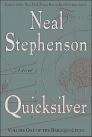
Quiksilver is the first of 3 tomes in the Baroque Cycle. I was a fan of Cryptonomicon, his previous novel. I thought it was one of the best pieces of fiction I had read. In this book, Neal Stephenson weaves a great tail of adventure combining it with insight into early scienctific societies, friction between Newton and Leibniz, financial markets, and cryptography. He does a great job of making you feel alive during the era in which the book is based.
I oscillated from feelings of 'wow, what a crazy awesome story' to feelings of occasional boredom in a few slow moving parts (say, 15-20% of the book). Its a great adventure, but there seems to be lots of wandering around stumbling across interesting little adventures but nothing that is making them tightly bound, like a plot. There is the James Burke-ification of Quicksilver (mercury was called Quicksilver in those days, thus the title). Yes indeed, it ties many of these tales together but this is a self defining process (if I want to tie everything back to the discovery of rope its easy, or wine, or the pursuit of the perfect coffee bean, its easy to do and sound mystifyingly insightful, academics are very good at wooing undergraduates with these insights...see capitalism really is at the heart of all evil, and America too).
As a sidenote: think about 'the boston tea party' as the traditional start of the Revolutionary war. This wasn't the start. There was no start. There is instead a cascading set of issues that serve to anchor what we trendily call a 'tipping point'. Often things just aren't that simple, but the human mind can recall stories better when they are weaved into these simple minded cause/effect relationships so they are used by historians to tell of the past, usually neglecting the complications and manipulating it to advantage of one party or another. (Compare Howard Zinn's telling of the History of the United States to that of your history teacher for more insight).
I was at Fergburger in Queenstown and somebody asked me if I'd recommend the book. They had started it and didn't really know if they should continue past the 150 pages they had read, finding it too filled with a continuous stream of characters and chronological chaos. I said 'No', if you don't like that it doesn't get any better, and the first of the 3 novels in the first book is best. Its not until 2/3 of the way through the book I notice there is an appendix that acts as a decoder ring for all of the characters, several of which have multiple names depending on the context of the scene or timeperiod of the book. This would have been useful in the BEGINNING of the book where I would have possibly found it sooner.
I feel this novel is a work of art. However, as a criticism, I want and expect more from the authors I read. I want to learn more than I did on this journey. I want epiphanies. I want structures, artifacts, and the humanities captured in the work of fiction that are told as fiction because they are too hard to convey as non-fiction. Stephenson captures the human side of the struggles we have now and the nature of science and finance and their similarities and differences to today. He wrote this out by HAND before typing it, and for that I give pause. To feel those words were needed so much he was willing to put them down with a pen, wow.
3.5 out of 5.
Nelson, Picton, and the cruise to Wellington...
After our Abel Tasman adventures we rolled into Nelson for the night. Its about 2 hours away. Had dinner at a place called The Boat Shed. First seafood we've had on our travels. I really liked Nelson, it was not really on the waterfront but was quite a big city with lots to do and my favorite coffee shop i've yet to experience in New Zealand called Kafeine. Was just excellent atmosphere with a huge courtyard and big sails hanging over it to shade you from the sun.
Visiting all of these cafes has qualified us to form some pretty strong opinions. While i can't comment on the coffee as I can't really distriminate I can comment on the locations. Low ceilings, dark environment, pastries are generally bad and should be avoided. Big spaces, tall ceilings, outdoor areas sheltered so lighting conditions for people reading and shelter options from weather (wind, rain) should also be considered. It seems its very tough to get a place that has all variables right: service, coffee, pastries, lighting, seating, ceiling,music (not prioritized). You'll find most places in Portland and Seattle are missing at least some aspect despite their having most of them. Coffee People on 23rd had the best ceiling space in PDX but has since been replaced by YAUIR, yet another upscale italian restaurant, the current dining fad.
Back to Nelson and Kafeine: it has it all. Most places around NZ close between 4-5 pm. The owner closed up around 4 but let us stick around until we felt like leaving since he was there doing some construction anyway, we stayed until around 5:30 just reading the paper for the first time in about 5-6 days. He even brought us water after about an hour. Just a great place. Unfortunately, closed on Mondays which was the next day so we had to find another place in the morning.
Our travels to Picton took us through some of the wine country in Northern part of the Southern Island of NZ. Picton was relatively uneventful. It was much smaller than Nelson with much less interesting stuff to do. Did take a run out on the trail to Ben's Bay and look around at the maritime artifacts. Super low key place.
Our boat cruise to Wellington was a bit choppy. It started out fine but as we rolled out to sea this huge ship started rolling back and forth. There was a large contingent of seniors on board who started moving back to the back of the boat,all within about a 10 minutes period before it started to have an effect on me but shortly afterwards I recalled what I was told the last time it happened to me 'go to the back of the boat and look towards shore'. This was quite effective however to get their I had to move through an ocean of old people and the amount of vomit on the floor was amazing. They had all jumped on board, cruised the cafeteria and bought $12 meals complete with meat, vegetables, and pasta, all of which I had to walk around, through and between to get to the back of the boat. They just ended up closing the bathrooms it was so bad upstairs and one of the stairwells had vomit sloshing around at the bottom so they had to close the doors, it really was something else. While it can be laughed at or used as a 'check out how gross this is' story now...i felt like i was going to never make it through.
All is well now in wellies. We love wellington. Very windy today but beautiful. Took a 4 mile run this morning along the waterfront and think we're going to stay for a few days here and just enjoy it. A not too good place like Picton (wasn't bad...just wasn't as good as Nelson or Wellington) ends up forcing one to recover by spending some extra time in the good places.
Visiting all of these cafes has qualified us to form some pretty strong opinions. While i can't comment on the coffee as I can't really distriminate I can comment on the locations. Low ceilings, dark environment, pastries are generally bad and should be avoided. Big spaces, tall ceilings, outdoor areas sheltered so lighting conditions for people reading and shelter options from weather (wind, rain) should also be considered. It seems its very tough to get a place that has all variables right: service, coffee, pastries, lighting, seating, ceiling,music (not prioritized). You'll find most places in Portland and Seattle are missing at least some aspect despite their having most of them. Coffee People on 23rd had the best ceiling space in PDX but has since been replaced by YAUIR, yet another upscale italian restaurant, the current dining fad.
Back to Nelson and Kafeine: it has it all. Most places around NZ close between 4-5 pm. The owner closed up around 4 but let us stick around until we felt like leaving since he was there doing some construction anyway, we stayed until around 5:30 just reading the paper for the first time in about 5-6 days. He even brought us water after about an hour. Just a great place. Unfortunately, closed on Mondays which was the next day so we had to find another place in the morning.
Our travels to Picton took us through some of the wine country in Northern part of the Southern Island of NZ. Picton was relatively uneventful. It was much smaller than Nelson with much less interesting stuff to do. Did take a run out on the trail to Ben's Bay and look around at the maritime artifacts. Super low key place.
Our boat cruise to Wellington was a bit choppy. It started out fine but as we rolled out to sea this huge ship started rolling back and forth. There was a large contingent of seniors on board who started moving back to the back of the boat,all within about a 10 minutes period before it started to have an effect on me but shortly afterwards I recalled what I was told the last time it happened to me 'go to the back of the boat and look towards shore'. This was quite effective however to get their I had to move through an ocean of old people and the amount of vomit on the floor was amazing. They had all jumped on board, cruised the cafeteria and bought $12 meals complete with meat, vegetables, and pasta, all of which I had to walk around, through and between to get to the back of the boat. They just ended up closing the bathrooms it was so bad upstairs and one of the stairwells had vomit sloshing around at the bottom so they had to close the doors, it really was something else. While it can be laughed at or used as a 'check out how gross this is' story now...i felt like i was going to never make it through.
All is well now in wellies. We love wellington. Very windy today but beautiful. Took a 4 mile run this morning along the waterfront and think we're going to stay for a few days here and just enjoy it. A not too good place like Picton (wasn't bad...just wasn't as good as Nelson or Wellington) ends up forcing one to recover by spending some extra time in the good places.
Sunday, February 26, 2006
Abel Tasman and Monueka
Headed North and East towards the town of Monueka where we spent the evening before heading off to the Abel Tasman area for a 2 day kayaking adventure in one of the most beautiful areas of the world. Similar to the virgin islands in terms of terrain, blue sky, beautiful clear water, birds everywhere.
In the morning we headed out to our kayak rental agency. We were on an unguided 2 day trip but the bus driver was also a guide and they wanted to be sure we knew what we were doing before sending us out in the company kayaks for 2 days so he wanted us to stay with him for the morning. The guide took to us immediately when we mentioned we were from Portland, apparently he's spent some time in Eugene and the pdx area so we were all good to him. (he immediately assumed we would be totally fine, and while in the end he was correct, we were less prepapared relative to the work we had put into getting things together for the milford trek).
After getting the rest of the crew together he let us stay with the guided tour. He gave us the basics of how to paddle, put on the spray skirts, etc. We were off, headed out with the rest of the crew. We stopped for lunch and chatted with the others on the tour. The waves were calm. Before we left on our own for the next day and a half he gave us a crash course on weather in the abel tasman which translated to 'you never really know, so ignore all the noise coming out of my mouth'. we headed out towards an island he suggested that we take a look at before heading north and the winds immediately changed from about 5 knots to 15 knots (you can tell because occasional whitecaps are 10 knots, constant whitecaps are about 15). it took us way too long to get to the island and we were pretty exhausted. after that we headed back to shore. we were paddling our hearts out and not making much progress against the wind that we were fighting againts (remember, 15 knots velocity to stand still....) so we make it into shore where its easier to paddle. we know this because apparently stacey heard him say it...i was too busy trying to figure out what he was talking about when he mentioned 'if a black line appears on the horizon...and then some words i couldn't process'. i mean, what black line? what does it look like? is it like this '-', a short black line or like this '--------------', or did he mean a grey line, like we could already see? And the seas were rough, i mean, our boat was kinda sloshing up and down these swells and we were kinda freaked out. When we were with the guide everything was kopasetic, but now things were getting crazy with the weather, but it was still beautiful outside, just wind and waves. and man, i was doing a horrible job with the rudder, just horrible. stacey didn't get ticked off once and was paddling her heart out to get us back to shore. (i was still looking at the horizon, and the map, and the waves...). i figured so long as the wavelength of the waves is less than 1/2 the boat we were probably okay and right now they were about 1/3 the length of the boat, but all this caught us off guard relative to the peacefullness of the morning waves.
We finally make it back to the shore line, and we just kept paddling. turns out, we made it back to shore, but now we had to deal with these gigantic rocks in front of us...i mean, were we supposed to go around them, between them? around meant crazy waters, through them meant the risk of tipping in a not too nice place, and i still have a scar between my eyes from the last little rock i talked with from a kayak.
so we go between the rocks, and fast, being careful to make sure the depth was enough, and we end up being okay, and we see on our map all these little shark fin shapes, which really mean waves and not sharks (no legend on the map but it was pretty obvious by the conditions and the names like 'mad mile', and stuff like that).
so we make it through those rocks, and two or three more sections, and we decide to skip just one more beach, but then we see that this big boat come out of a bay, and i happen to have a map with a big boat in a bay called anchorage so i know that that is one bay AFTER our beach, so we turn around just to check out the beach. no kidding, the wind was so bad we just pointed the boat at the beach and it was pushed into shore, took less than 5 minutes to get across what took about 20 minutes the other way. turns out, this was our beach that we were camping that night and we had almost passed it. so we pulled the boat in, dried off a bit and tried to calm down from the obvious freaked out 'what the heck have we gotten into feeling we both had'. we weren't really saying much to each other which was kinda odd, just looking around. i wasn't feeling particuarly confident about things before landing, and had just been wondering 'if this is as bad as it gets, we'll be fine, but how much worse does it become?'.
on the beach we are approached by our guide and the rest of the crew that had followed the shoreline for their guided portion of the tour....everything was 'cool' to him which is pretty consistent with how all the guides are in new zealand, i kinda wonder if somebody drowns is it still 'sweet as...cheers mate'' in this culture. i mean, everything is 'sweet as' until what? what event? death? broken limb? sweet as? i know it sounds pessimistic, especially coming from a culture as ruled by fear as america, but man, this is the other extreme. so, he says 'i was really glad to see you guys turn around from that island, it was crazy out there, 15 knots wind and you were out there fighting against it.'
so we retire, quiet. wonder what the next day is going to hold. we also took a small walk to anchorage, about 30 minutes away, to steal some fresh water and see how they live on the other half of the island where there were showers and stoves and such. for those that have seen 'lost' you know how it is. its like we stumbled upon civilization before walking back to our tent for the night. we cooked up a backcountry meal along with some extra noodles and munched a couple toblerones i had stashed in my pack.
the next day was MUCH more normal. we got up, paddled around, saw some seals, schools of small fish, ducks, seagulls, and beautiful scenery. no currents, no extreme waves, even saw a blue penguin on our trip back in the aqua taxi which was just crazy cool. we finished about 4 hours earlier than expected and were able to catch a bus back to town to get our car and head off to Nelson, our next stop. the bus thing was weird, he just picked us up where the aqua taxi dropped us off and drove us 45 minutes back to monueka, and dropped us off. no charge. like 'hey, bums, just get in my bus and i'll drive you back, no worries mate, sweet as'.
oh, the aqua taxi: basically, in abel tasman, you can paddle as long as you want, then these boats come by and pick you up and take you back to the main launch point, or anywhere else, for a reasonable fee. they will come by and pick your boats up to, so you can avoid doing out and backs, just basically paddle as far as you want, pull off on a beach, and hail an aqua taxi back. they take care of rounding up the boats at the end of the day and getting them back to various companies, is that cool or what?
Nelson and Picton are next. Then we head to the North Island.
In the morning we headed out to our kayak rental agency. We were on an unguided 2 day trip but the bus driver was also a guide and they wanted to be sure we knew what we were doing before sending us out in the company kayaks for 2 days so he wanted us to stay with him for the morning. The guide took to us immediately when we mentioned we were from Portland, apparently he's spent some time in Eugene and the pdx area so we were all good to him. (he immediately assumed we would be totally fine, and while in the end he was correct, we were less prepapared relative to the work we had put into getting things together for the milford trek).
After getting the rest of the crew together he let us stay with the guided tour. He gave us the basics of how to paddle, put on the spray skirts, etc. We were off, headed out with the rest of the crew. We stopped for lunch and chatted with the others on the tour. The waves were calm. Before we left on our own for the next day and a half he gave us a crash course on weather in the abel tasman which translated to 'you never really know, so ignore all the noise coming out of my mouth'. we headed out towards an island he suggested that we take a look at before heading north and the winds immediately changed from about 5 knots to 15 knots (you can tell because occasional whitecaps are 10 knots, constant whitecaps are about 15). it took us way too long to get to the island and we were pretty exhausted. after that we headed back to shore. we were paddling our hearts out and not making much progress against the wind that we were fighting againts (remember, 15 knots velocity to stand still....) so we make it into shore where its easier to paddle. we know this because apparently stacey heard him say it...i was too busy trying to figure out what he was talking about when he mentioned 'if a black line appears on the horizon...and then some words i couldn't process'. i mean, what black line? what does it look like? is it like this '-', a short black line or like this '--------------', or did he mean a grey line, like we could already see? And the seas were rough, i mean, our boat was kinda sloshing up and down these swells and we were kinda freaked out. When we were with the guide everything was kopasetic, but now things were getting crazy with the weather, but it was still beautiful outside, just wind and waves. and man, i was doing a horrible job with the rudder, just horrible. stacey didn't get ticked off once and was paddling her heart out to get us back to shore. (i was still looking at the horizon, and the map, and the waves...). i figured so long as the wavelength of the waves is less than 1/2 the boat we were probably okay and right now they were about 1/3 the length of the boat, but all this caught us off guard relative to the peacefullness of the morning waves.
We finally make it back to the shore line, and we just kept paddling. turns out, we made it back to shore, but now we had to deal with these gigantic rocks in front of us...i mean, were we supposed to go around them, between them? around meant crazy waters, through them meant the risk of tipping in a not too nice place, and i still have a scar between my eyes from the last little rock i talked with from a kayak.
so we go between the rocks, and fast, being careful to make sure the depth was enough, and we end up being okay, and we see on our map all these little shark fin shapes, which really mean waves and not sharks (no legend on the map but it was pretty obvious by the conditions and the names like 'mad mile', and stuff like that).
so we make it through those rocks, and two or three more sections, and we decide to skip just one more beach, but then we see that this big boat come out of a bay, and i happen to have a map with a big boat in a bay called anchorage so i know that that is one bay AFTER our beach, so we turn around just to check out the beach. no kidding, the wind was so bad we just pointed the boat at the beach and it was pushed into shore, took less than 5 minutes to get across what took about 20 minutes the other way. turns out, this was our beach that we were camping that night and we had almost passed it. so we pulled the boat in, dried off a bit and tried to calm down from the obvious freaked out 'what the heck have we gotten into feeling we both had'. we weren't really saying much to each other which was kinda odd, just looking around. i wasn't feeling particuarly confident about things before landing, and had just been wondering 'if this is as bad as it gets, we'll be fine, but how much worse does it become?'.
on the beach we are approached by our guide and the rest of the crew that had followed the shoreline for their guided portion of the tour....everything was 'cool' to him which is pretty consistent with how all the guides are in new zealand, i kinda wonder if somebody drowns is it still 'sweet as...cheers mate'' in this culture. i mean, everything is 'sweet as' until what? what event? death? broken limb? sweet as? i know it sounds pessimistic, especially coming from a culture as ruled by fear as america, but man, this is the other extreme. so, he says 'i was really glad to see you guys turn around from that island, it was crazy out there, 15 knots wind and you were out there fighting against it.'
so we retire, quiet. wonder what the next day is going to hold. we also took a small walk to anchorage, about 30 minutes away, to steal some fresh water and see how they live on the other half of the island where there were showers and stoves and such. for those that have seen 'lost' you know how it is. its like we stumbled upon civilization before walking back to our tent for the night. we cooked up a backcountry meal along with some extra noodles and munched a couple toblerones i had stashed in my pack.
the next day was MUCH more normal. we got up, paddled around, saw some seals, schools of small fish, ducks, seagulls, and beautiful scenery. no currents, no extreme waves, even saw a blue penguin on our trip back in the aqua taxi which was just crazy cool. we finished about 4 hours earlier than expected and were able to catch a bus back to town to get our car and head off to Nelson, our next stop. the bus thing was weird, he just picked us up where the aqua taxi dropped us off and drove us 45 minutes back to monueka, and dropped us off. no charge. like 'hey, bums, just get in my bus and i'll drive you back, no worries mate, sweet as'.
oh, the aqua taxi: basically, in abel tasman, you can paddle as long as you want, then these boats come by and pick you up and take you back to the main launch point, or anywhere else, for a reasonable fee. they will come by and pick your boats up to, so you can avoid doing out and backs, just basically paddle as far as you want, pull off on a beach, and hail an aqua taxi back. they take care of rounding up the boats at the end of the day and getting them back to various companies, is that cool or what?
Nelson and Picton are next. Then we head to the North Island.
Saturday, February 25, 2006
The West Coast of New Zealand
After Wanaka, we headed west. The west coast consists of a few towns. Most notably: Haast, Franz Joseph/Fox Glacier, and Greymouth. Haast was a drive by. We did stop at a nature center to look around and read about the Fiordland National park, etc. The west coast prides itself on the history of Maori culture, gold mining, coal, and resilency through tough times (not unlike the United States). This was emphasized time and time again in the historical literature.
Driving the West Coast took longer than expected due to the windy two lane road so that took some adjusting to time schedules. We anticipated getting into Franz Joseph a couple hours earlier than we did. No worries, but I was holding off on my latte and was getting a little razzled at the driving. Fox and Franz Joseph (FJ) are really two towns whose sole purpose is to helicopter people up to these beautiful glaciers to hike through them, etc.
Previously, Stacey and I had discussed the Fox/FJ helicopter trip. based on its significant cost i was pretty much like 'no way' but we went ahead and booked it anyway cause it cost nothing to just leave the booking and let it expire. i think stacey was hoping for me to change my mind cause she had heard good things from some other folks. when we got to FJ i was totally caught up in it and the images and was like 'well yeah, heck that looks awesome we should do it' and yeah it costs a bit but looked like a once in a lifetime experience so i was pretty set to drop the change.
However, after camping the night in FJ (top 10 holiday park #2!) it rained on us in the tent the whole night. we got up and caught a breakfast and did some reading in town to decide what to do that day. (again...hoping the weather would change). it looked pretty hopeless, and it also didn't look like it ever really got any better so we settled for a short day hike up to the glacier face, to which the benjamin's were doing much rejoicing in my pocketbook.
so, up to franz joseph we go. in the rain. and more rain. and more rain. so i say 'no, this is dumb, i am getting soaked and its cold, let's go up the hill a bit on this short hike to a rock called spectacle rock or something like that and we'll see what we can see. so stacey agreed (as far as she was concerned, the sooner we got the hell out of this nasty rainy place the better--the weather sucked and there was lots more to see in the north). anyway, we went up the 10 minute hike, i ran to stay warm. we looked at the muddy ice glacier (seen em before, been up mt. st helens about 3/4 times and mt. rainier once). yeah. let's go. so we head to greymouth.
now, greymouth ain't much to look at. really its an industrial town with a little tourist business due to its association with the west coast. but it did have a great backpackers lodge called neptunes we booked a room and got a nice hot shower, cleaned up, and explored town real quick. the folks that run this place are super friendly, super nice, etc. so much so and we liked our digs so much we just camped out for another day to get some sun and catch our breath in a quiet place. we also needed to do our bookings for the north part of the south island (abel tasman area) and spent a morning planning this and an afternoon gettings things done at the tourist bureau called iSite.
hokitika. if i were to go back i might recommend actually staying at the town just south of greymouth we stopped at called hokitika. it had some nice bakeries and cafes and didn't seem as industrial as greymouth. we had already jetted past so we really didn't want to go back and greymouth was a good enough place to hang our hat for 24 hours and get some sun.
overall: if you can get a heli-hike the west coast is worth it. stay in hokitika. we also heard from other travellers that fox actually has a less commercial flair to their guided glacier hikes so that might be a good way to see the glaciers.
the rain forest we drove through on the west coast was quite beautiful. while less impressive if you've already visited the northwest its definitely beautiful to see. while we have bigger trees and just as beautiful forests, probably less dense than here with much different wildlife. the birds here are really cool. and the vegetation is different, palm trees and very thick bush, so thick you cannot penetrate it, which i find totally crazy. the forests of the pacific NW are very open and easy to walk through.
pancake rocks: how could i forget the pancake rocks! this is a definite stop off for about an hour. we took a look and got some great pictures of these geyser like bursts of water when it comes in and hits these crazy looking rock formations that look like stacked pancakes. this was really our last interesting thing before heading inland towards our kayaking in abel tasman.
Driving the West Coast took longer than expected due to the windy two lane road so that took some adjusting to time schedules. We anticipated getting into Franz Joseph a couple hours earlier than we did. No worries, but I was holding off on my latte and was getting a little razzled at the driving. Fox and Franz Joseph (FJ) are really two towns whose sole purpose is to helicopter people up to these beautiful glaciers to hike through them, etc.
Previously, Stacey and I had discussed the Fox/FJ helicopter trip. based on its significant cost i was pretty much like 'no way' but we went ahead and booked it anyway cause it cost nothing to just leave the booking and let it expire. i think stacey was hoping for me to change my mind cause she had heard good things from some other folks. when we got to FJ i was totally caught up in it and the images and was like 'well yeah, heck that looks awesome we should do it' and yeah it costs a bit but looked like a once in a lifetime experience so i was pretty set to drop the change.
However, after camping the night in FJ (top 10 holiday park #2!) it rained on us in the tent the whole night. we got up and caught a breakfast and did some reading in town to decide what to do that day. (again...hoping the weather would change). it looked pretty hopeless, and it also didn't look like it ever really got any better so we settled for a short day hike up to the glacier face, to which the benjamin's were doing much rejoicing in my pocketbook.
so, up to franz joseph we go. in the rain. and more rain. and more rain. so i say 'no, this is dumb, i am getting soaked and its cold, let's go up the hill a bit on this short hike to a rock called spectacle rock or something like that and we'll see what we can see. so stacey agreed (as far as she was concerned, the sooner we got the hell out of this nasty rainy place the better--the weather sucked and there was lots more to see in the north). anyway, we went up the 10 minute hike, i ran to stay warm. we looked at the muddy ice glacier (seen em before, been up mt. st helens about 3/4 times and mt. rainier once). yeah. let's go. so we head to greymouth.
now, greymouth ain't much to look at. really its an industrial town with a little tourist business due to its association with the west coast. but it did have a great backpackers lodge called neptunes we booked a room and got a nice hot shower, cleaned up, and explored town real quick. the folks that run this place are super friendly, super nice, etc. so much so and we liked our digs so much we just camped out for another day to get some sun and catch our breath in a quiet place. we also needed to do our bookings for the north part of the south island (abel tasman area) and spent a morning planning this and an afternoon gettings things done at the tourist bureau called iSite.
hokitika. if i were to go back i might recommend actually staying at the town just south of greymouth we stopped at called hokitika. it had some nice bakeries and cafes and didn't seem as industrial as greymouth. we had already jetted past so we really didn't want to go back and greymouth was a good enough place to hang our hat for 24 hours and get some sun.
overall: if you can get a heli-hike the west coast is worth it. stay in hokitika. we also heard from other travellers that fox actually has a less commercial flair to their guided glacier hikes so that might be a good way to see the glaciers.
the rain forest we drove through on the west coast was quite beautiful. while less impressive if you've already visited the northwest its definitely beautiful to see. while we have bigger trees and just as beautiful forests, probably less dense than here with much different wildlife. the birds here are really cool. and the vegetation is different, palm trees and very thick bush, so thick you cannot penetrate it, which i find totally crazy. the forests of the pacific NW are very open and easy to walk through.
pancake rocks: how could i forget the pancake rocks! this is a definite stop off for about an hour. we took a look and got some great pictures of these geyser like bursts of water when it comes in and hits these crazy looking rock formations that look like stacked pancakes. this was really our last interesting thing before heading inland towards our kayaking in abel tasman.
Arrowtown and Wanaka
Been a few days since the last. Headed out of Queenstown and up the west coast of the southern island of New Zealand. We stopped off in Arrowhead, an old gold mining town just north of queenstown. was a quiant little downtown area with shops, pubs, etc. took a quick walking tour of an old village of chinese gold prospectors that were here when gold was first struck in the 1850's era and their village still had some pieces around. the town is trying to restore them. we had an overnight stay in the town of Wanaka. this was our first experience with a 'holiday park'. think KOA camground. has facilities, no real view or nature. but there is a shower and some flat spots to camp and a sneezy lady next to us in a tent that kept me up until stacey handed me some earplugs, at which point i was fast asleep. we got up the next morning and headed downtown to sit by the waterfront and have a coffee and do some reading. stacey walked around and checked out the shops. i cracked open a new book (seperate chapter on that later) and enjoyed the view. we also picked up a few supplies at a local camping shop like rope, etc. at some point i had several pieces of rope all nice and done up for the rainfly and tent...well...those managed to disappear from my tent bag at some point in the past 6 months and we had none during a rainy night. ended up okay but could have been a really wet experience.
we're driving Sunny, our 4 door Nissan with lawnmower like cornering and metro like acceleration. lookout all those new retro muscle cars, Sunny is in your rear-view!
we're driving Sunny, our 4 door Nissan with lawnmower like cornering and metro like acceleration. lookout all those new retro muscle cars, Sunny is in your rear-view!
Saturday, February 18, 2006
Milford Trek
Overall, the trip was absolutely incredible. 4 days of beautiful weather, no rain, etc.
Got up early in the morning to catch a bus to Te Anau. Wanted to spend the day there and stayed in a hostel that night. Was a quant little town on Lake Te Anau. They had a great little theater to watch a movie that was filmed about the area that was 30 minutes long. Also watched the movie Murderball later in the afternoon at the same place....that movie was really good as well...put the whining I'm doing about my wrist playing dodgeball into perspective.
We have some great photos. If you need, send me a quick email to my yahoo account and I'll send you a link to the snapfish site.
Day 1
The first day we took a 20 minute bus ride to a boat that cruised us up Lake Te Anau to the beginning of the Trek. The hike was a short one for the first day, only about 1 hour 30 minutes. We finished this early and hung around the hut which was complete with a helicopter landing pad, propane stoves, and bathrooms. All of the huts had these accomadations. No showers but there was cold running water. Apparently they helicopter in and out any waste produced at the huts twice a year. First chance to try out our cooking gear as well as our dehydrated meals, which I have to say are suprisingly tasty!
Day 2
long day.
We stopped along the trek near the river for a lunch break (cheese and crackers) and 2 wea decided to join us. Wea are basically wild mountain parrots, but about 4 times the size of a typical pet parrot. Thing about the size of a medium sized cat or a typical hawk. And they have sharp, pointy beaks that are a bit threatening when they open their mouths. We hadn't really done any reading about these birds at this point and didn't really know what to think, so we were quite suprised when the birds walked right up to us about 2 feet away and opened their beaks. Later, we were advised to not leave anything out or these birds would take it, and indeed some folks had a whole bag of dried fruit carried off and one person was swooped down upon in order to steal a camera!
After a quick lunch at 'the bus stop' hut along the river, we continued our ascent to our hut for the evening. We also broke out the trekking poles to give us support in some more precarious predicaments along the way.
Day 3
Day 3 was by far the most physically intense day of the trek. We rose about 550 meters to climb to the peak of Mt. XXX then returned down the other side about 1000 meters to our final hut on the trek. The uphill we took out in about 1 hr. 40 minutes and was not bad, but the 100 meter downhill was much more intense as well as being a bit scary. About half way through my left knee was feeling a bit edgy so I relied on my trekking poles quite a bit. Downhill is generally pretty hard on the knees, but carrying a rather heavy pack combined with already having miles under your belt makes it that much more interesting. Additionally, the 'path' was really lots of boulders that you were walking down, most of which were moist and many covered in running water. The vibram soles were valuable here as well as using both trekking poles to keep balanced.
Day 3 also included a 90 minute detour to take a look at Sutherland Falls, a beautiful 500 meter waterfall. Well worth the hike but my brain doesn't do real well with the whole out and back trip after the uphill and downhill we just faced. Nevertheless, we were able to leave our packs at the bottom so that made it do-able.
Day 4
An early rise and breakfast on the run. We left camp at 7am and had to meet a boat picking us up in Milford Sound at 2pm at a place called Sandfly Point. The previous night I had written down various markers along the way and the times we needed to get to each of them to keep on time. The terrain was easier to handle than the previous day but the elevation map was misleading: it implied that it was up for a bit then lots of downhill. In reality, there were lots of little ups and downs along the way. Saw a rock in the shape of a bell and some beautiful waterfalls along the way. Made it with some time to change our clothes before the boat picked us up and took us to the bus on the other side of the beautiful Milford Sound. After that, it was a long 5 hours back to Queenstown! Ended the trip with about 15 sandfly bites. I don't know much about these creatures, but do know that their bites itch like mad. No blisters, no knees giving out, no crazy ankle twists!
We have tons of great photos and met some nice people along the way, its really impossible to describe what we could see without looking at the photos, and even then when we look at the photos its impossible to do the sights and sounds justice. The Milford Trek is considered one of those things you should do before you die, many writers have commented its one of the most significant journies of their lifetimes, and know I understand better.
Argh, always seem to be getting kicked out of these Internet Cafes....gotta post before they shut off my machine!
Got up early in the morning to catch a bus to Te Anau. Wanted to spend the day there and stayed in a hostel that night. Was a quant little town on Lake Te Anau. They had a great little theater to watch a movie that was filmed about the area that was 30 minutes long. Also watched the movie Murderball later in the afternoon at the same place....that movie was really good as well...put the whining I'm doing about my wrist playing dodgeball into perspective.
We have some great photos. If you need, send me a quick email to my yahoo account and I'll send you a link to the snapfish site.
Day 1
The first day we took a 20 minute bus ride to a boat that cruised us up Lake Te Anau to the beginning of the Trek. The hike was a short one for the first day, only about 1 hour 30 minutes. We finished this early and hung around the hut which was complete with a helicopter landing pad, propane stoves, and bathrooms. All of the huts had these accomadations. No showers but there was cold running water. Apparently they helicopter in and out any waste produced at the huts twice a year. First chance to try out our cooking gear as well as our dehydrated meals, which I have to say are suprisingly tasty!
Day 2
long day.
We stopped along the trek near the river for a lunch break (cheese and crackers) and 2 wea decided to join us. Wea are basically wild mountain parrots, but about 4 times the size of a typical pet parrot. Thing about the size of a medium sized cat or a typical hawk. And they have sharp, pointy beaks that are a bit threatening when they open their mouths. We hadn't really done any reading about these birds at this point and didn't really know what to think, so we were quite suprised when the birds walked right up to us about 2 feet away and opened their beaks. Later, we were advised to not leave anything out or these birds would take it, and indeed some folks had a whole bag of dried fruit carried off and one person was swooped down upon in order to steal a camera!
After a quick lunch at 'the bus stop' hut along the river, we continued our ascent to our hut for the evening. We also broke out the trekking poles to give us support in some more precarious predicaments along the way.
Day 3
Day 3 was by far the most physically intense day of the trek. We rose about 550 meters to climb to the peak of Mt. XXX then returned down the other side about 1000 meters to our final hut on the trek. The uphill we took out in about 1 hr. 40 minutes and was not bad, but the 100 meter downhill was much more intense as well as being a bit scary. About half way through my left knee was feeling a bit edgy so I relied on my trekking poles quite a bit. Downhill is generally pretty hard on the knees, but carrying a rather heavy pack combined with already having miles under your belt makes it that much more interesting. Additionally, the 'path' was really lots of boulders that you were walking down, most of which were moist and many covered in running water. The vibram soles were valuable here as well as using both trekking poles to keep balanced.
Day 3 also included a 90 minute detour to take a look at Sutherland Falls, a beautiful 500 meter waterfall. Well worth the hike but my brain doesn't do real well with the whole out and back trip after the uphill and downhill we just faced. Nevertheless, we were able to leave our packs at the bottom so that made it do-able.
Day 4
An early rise and breakfast on the run. We left camp at 7am and had to meet a boat picking us up in Milford Sound at 2pm at a place called Sandfly Point. The previous night I had written down various markers along the way and the times we needed to get to each of them to keep on time. The terrain was easier to handle than the previous day but the elevation map was misleading: it implied that it was up for a bit then lots of downhill. In reality, there were lots of little ups and downs along the way. Saw a rock in the shape of a bell and some beautiful waterfalls along the way. Made it with some time to change our clothes before the boat picked us up and took us to the bus on the other side of the beautiful Milford Sound. After that, it was a long 5 hours back to Queenstown! Ended the trip with about 15 sandfly bites. I don't know much about these creatures, but do know that their bites itch like mad. No blisters, no knees giving out, no crazy ankle twists!
We have tons of great photos and met some nice people along the way, its really impossible to describe what we could see without looking at the photos, and even then when we look at the photos its impossible to do the sights and sounds justice. The Milford Trek is considered one of those things you should do before you die, many writers have commented its one of the most significant journies of their lifetimes, and know I understand better.
Argh, always seem to be getting kicked out of these Internet Cafes....gotta post before they shut off my machine!
Subscribe to:
Posts (Atom)
